Organisations have never invested more in cybersecurity. Budgets have grown, security tools have multiplied and teams are busier than ever. Yet for many, that investment is not translating into better outcomes. Detecting threats quickly, responding effectively and reducing risk remain persistent challenges.
Part of the problem is the growing complexity of security environments. As organisations have added new tools and capabilities to address evolving threats and requirements, many have been left with fragmented systems, disconnected data and processes that still rely heavily on manual effort. This makes it harder for teams to get the visibility and context they need to make decisions and act quickly.
Now, AI is adding further pressure. Attackers are using it to automate activity, increase the sophistication of attacks and operate at greater speed and scale. As threats evolve faster, the limitations of fragmented security operations become more pronounced, making it increasingly difficult for teams to keep pace.
Simply adding more technology is unlikely to solve the problem. In this blog, we explore what needs to change and how organisations can build a more connected and effective security operation for the age of AI.
The illusion of control
Most organisations have invested heavily in security. New tools have been added as new risks have emerged. Alerts are arriving. Dashboards are full. On paper, everything looks covered.
But those investments have often been made over time, not as a connected strategy. As a result, many security stacks have grown faster than they’ve been integrated. One console monitors endpoints, another identity, others cloud and email. Each does its job, but they do not always work together. Data remains spread across separate platforms, leaving teams without a complete view of an attack.
When something happens, those gaps matter. Threats may be detected, but responding often depends on manual processes and people joining the dots. Security, IT and compliance teams each hold part of the picture, making it harder to act quickly and with confidence.
The result is a security operation that stays busy but still leaves room for risk. Because being busy is not the same as being secure.
The real cost of noise
Fragmentation doesn’t just make investigation harder. It also creates noise. Every tool adds another stream of alerts, another dashboard to monitor and another source of context to piece together. The result is an operation that feels busy, but not necessarily informed.
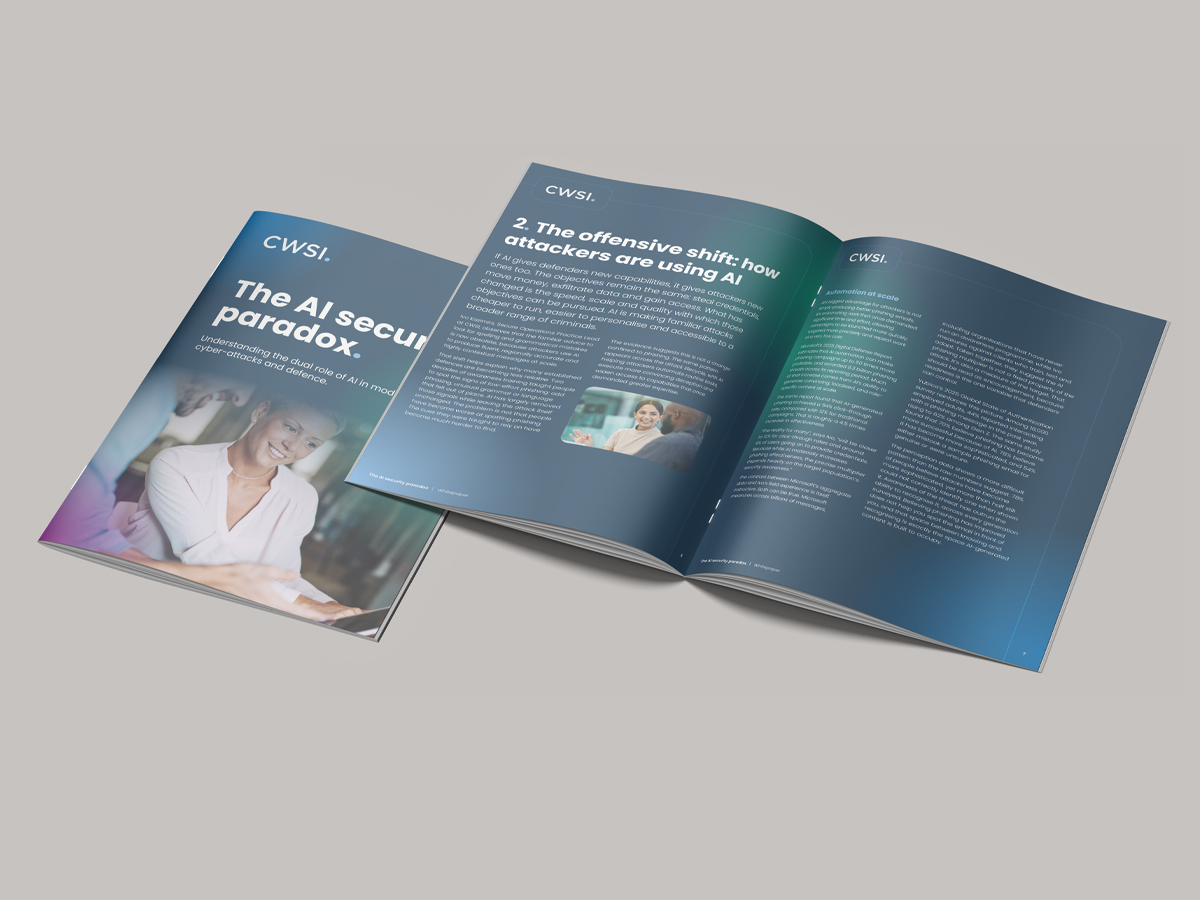
The scale of the problem is reflected in the numbers. Research referenced in our latest whitepaper found that the average organisation is managing around eleven separate security consoles. With security spread across so many platforms, it is perhaps unsurprising that close to half of all alerts are false positives.
The cost goes beyond wasted time. Constant noise affects judgement. When a large proportion of alerts lead nowhere, people naturally become more sceptical of what appears in the queue. A genuine intrusion can then look like one more routine alert among many.
Alert fatigue is not simply an efficiency issue. It creates a security risk of its own.
Why fixing it is difficult
Most organisations already understand the problem. The challenge is turning that understanding into lasting change.
Priorities compete, resources are limited, and it’s not always clear where to begin. Even with a sound strategy, improving day-to-day operations takes time, coordination and sustained effort.
As a result, many organisations focus on incremental improvements. Another tool is added. Another rule is written. Another dashboard appears. Each change may solve an immediate need, but the underlying structure remains much the same.
Meanwhile, attackers are not standing still. AI is helping them work faster, create more convincing lures and shorten the time between finding a weakness and exploiting it. Security teams already spending too much time managing noise are left with even less time to focus on genuine threats.
What needs to change
The way forward is not about doing more. It is about making what you already have work better together.
In practice, that means focusing on four shifts:
From fragmentation to integration
Connect tools, data and workflows so teams can see the full picture.
From reactive to proactive
Identify and address risks before they become incidents.
From volume to prioratisation
Direct attention towards the threats that matter most.
From complexity to clarity
Simplify processes so teams can make easier decisions and respond faster.
These shifts are not delivered by a single feature or product. They come from designing, managing and supporting the security operation as a whole.
Where AI makes a difference
Connecting tools, reducing noise, and giving teams a clearer view of what matters is difficult to achieve through manual effort alone. This is where AI is beginning to make a practical difference.
Used well, it can connect information across systems, reduce routine investigation and help teams focus on the alerts that matter most. In other words, it helps make the operation simpler rather than adding to its complexity.