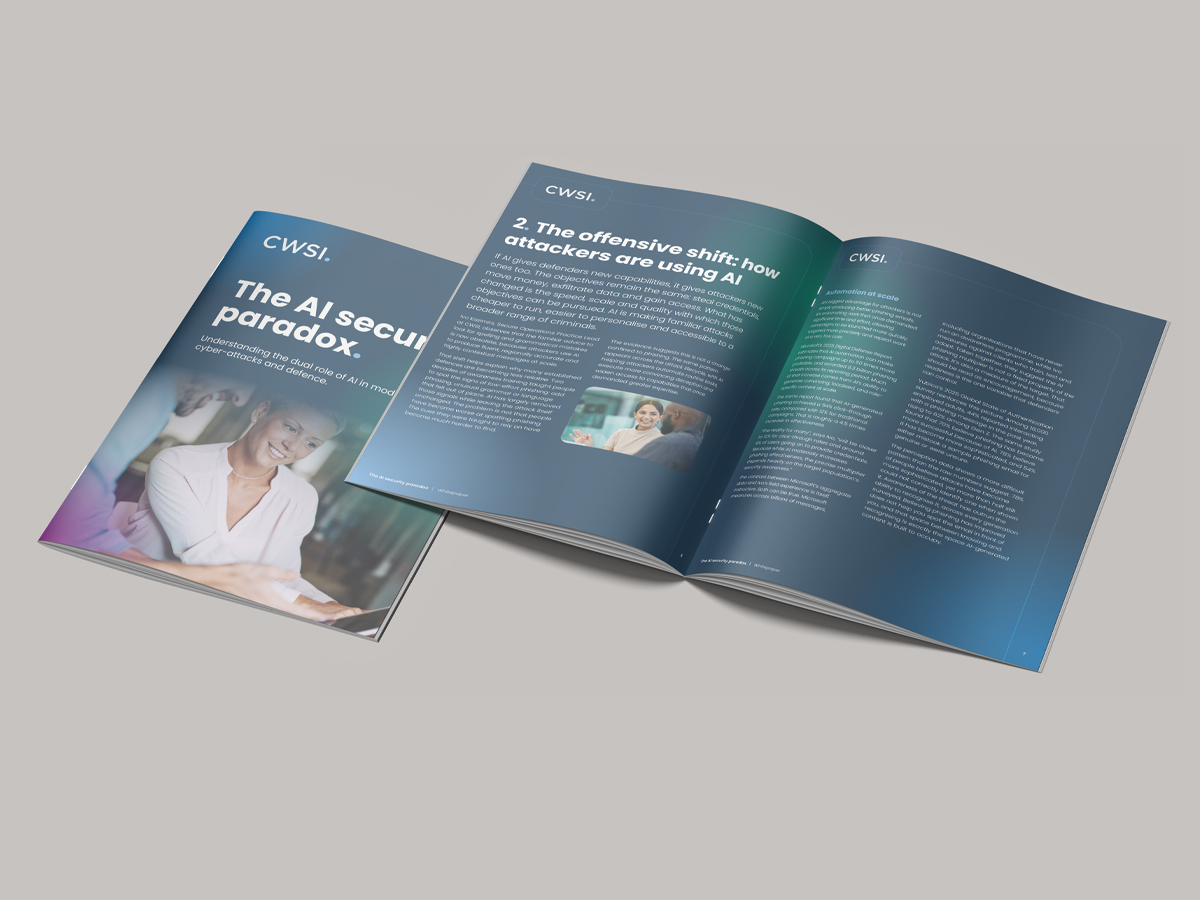
A practical guide to understanding the dual role of AI in modern cyber-attacks and defence.
AI is changing cyber security on both sides.
Attackers are using AI to move faster, scale their efforts and create more convincing attacks. But the same technology can also give security teams an advantage, helping them separate the signal from the noise, respond more quickly and give analysts more time to focus on the threats that matter most.
The question for organisations is no longer whether AI has a role to play in cyber security, but where it can make the biggest difference and how to introduce it without adding unnecessary complexity.
This whitepaper looks at both sides of that challenge. It explores how attackers are using AI throughout the attack lifecycle and where AI can strengthen cyber defence.
Download your copy to learn how to identify where AI can make the biggest difference and put it to work responsibly across your security operations.
Inside this whitepaper you’ll find:
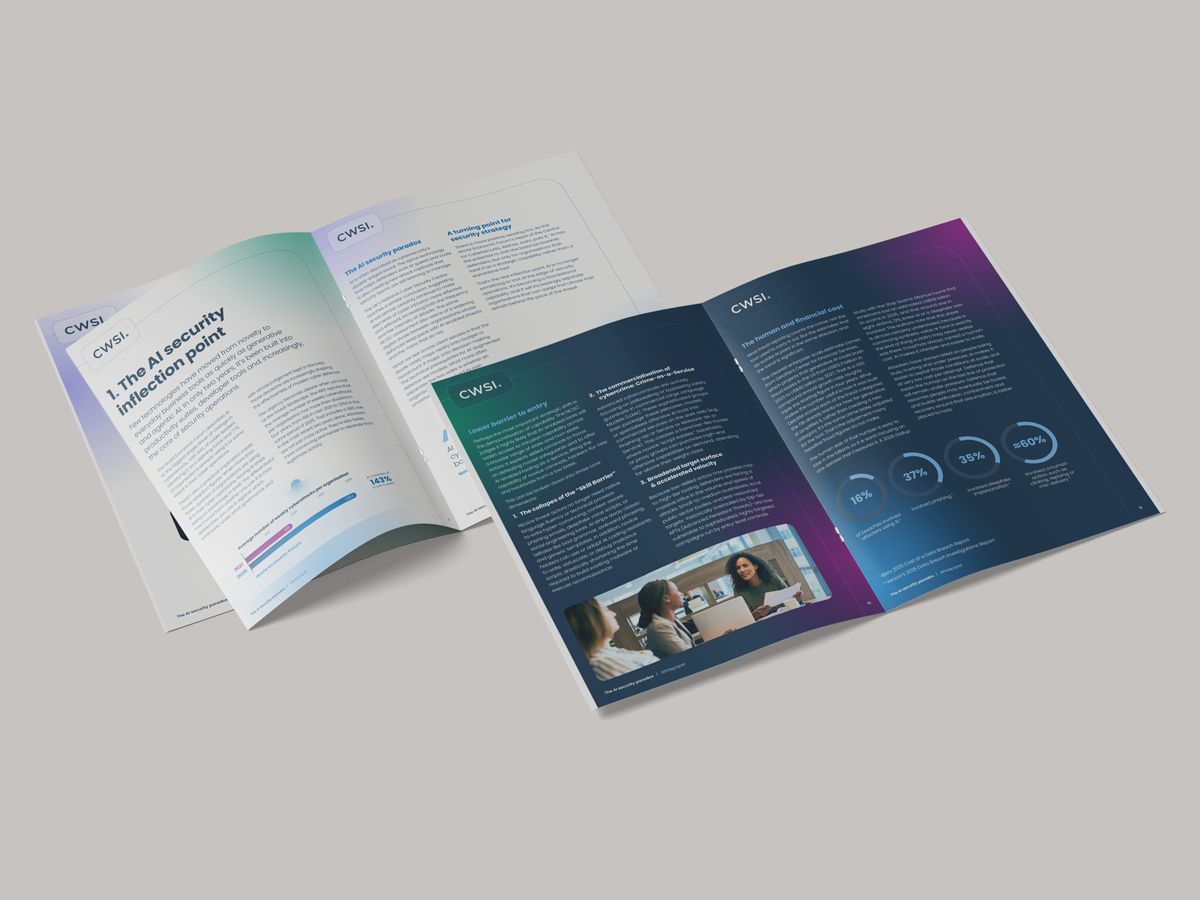
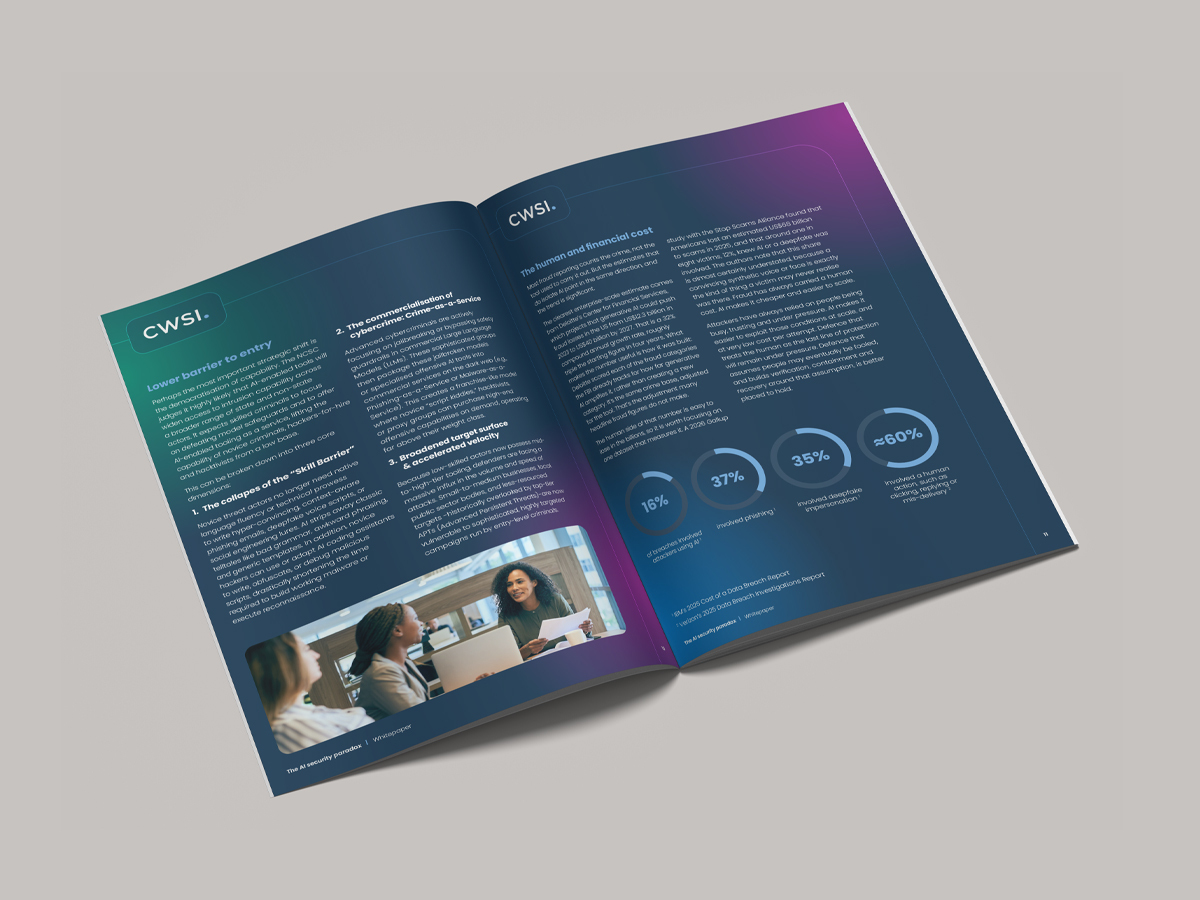
- How AI is making cyberattacks faster, more scalable and more sophisticated
- Why traditional security controls are struggling to keep pace with AI-enabled threats
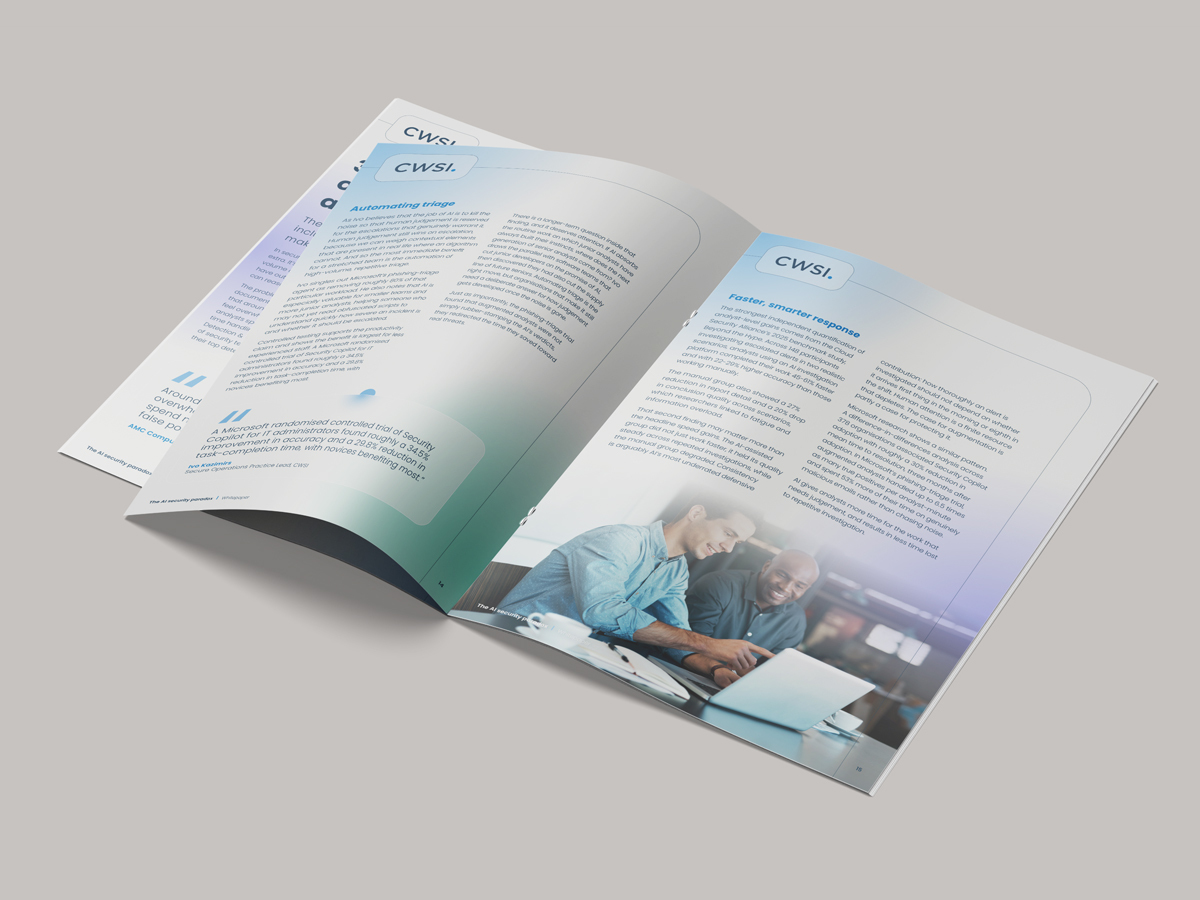
- How AI can help security teams detect threats faster, cut through alert noise and respond more effectively
- Where security operations teams are falling behind in adopting and operationalising AI
- A practical four-stage roadmap for putting AI to work in your security operations
The AI security paradox in numbers
50%
more profitable phishing campaigns through AI automation.
4.5x
higher click-through rates for AI-generated phishing.
90 days
shorter breach lifecycles for organisations extensively using AI and automation.
US$1.9 million
average savings per breach through AI and automation.