Your firm may be ready for AI. Are your security foundations?
AI tools like Microsoft Copilot can help legal teams work faster, from legal research and drafting contracts to matter preparation and document review.
But once AI connects to your Microsoft 365 environment, it can only be as safe as the permissions, access controls and information governance already in place.
For legal firms, protecting client confidentiality isn’t optional. It needs to be built into your AI strategy from the start.
Download our latest guide for practical guidance on strengthening the governance, identity and data foundations your firm needs before making AI part of day-to-day operations.
What You’ll Learn
- Protect confidential, privileged and sensitive client information from unintended AI exposure
- Review access to client matters, practice groups and ethical walls
- Classify and protect legal documents before AI can use them
- Reduce the risks created by shadow AI and unsanctioned tools across the firm
- Roll out AI assistants and agents in a controlled, compliant and auditable way
- Move from experimentation to secure, controlled AI adoption
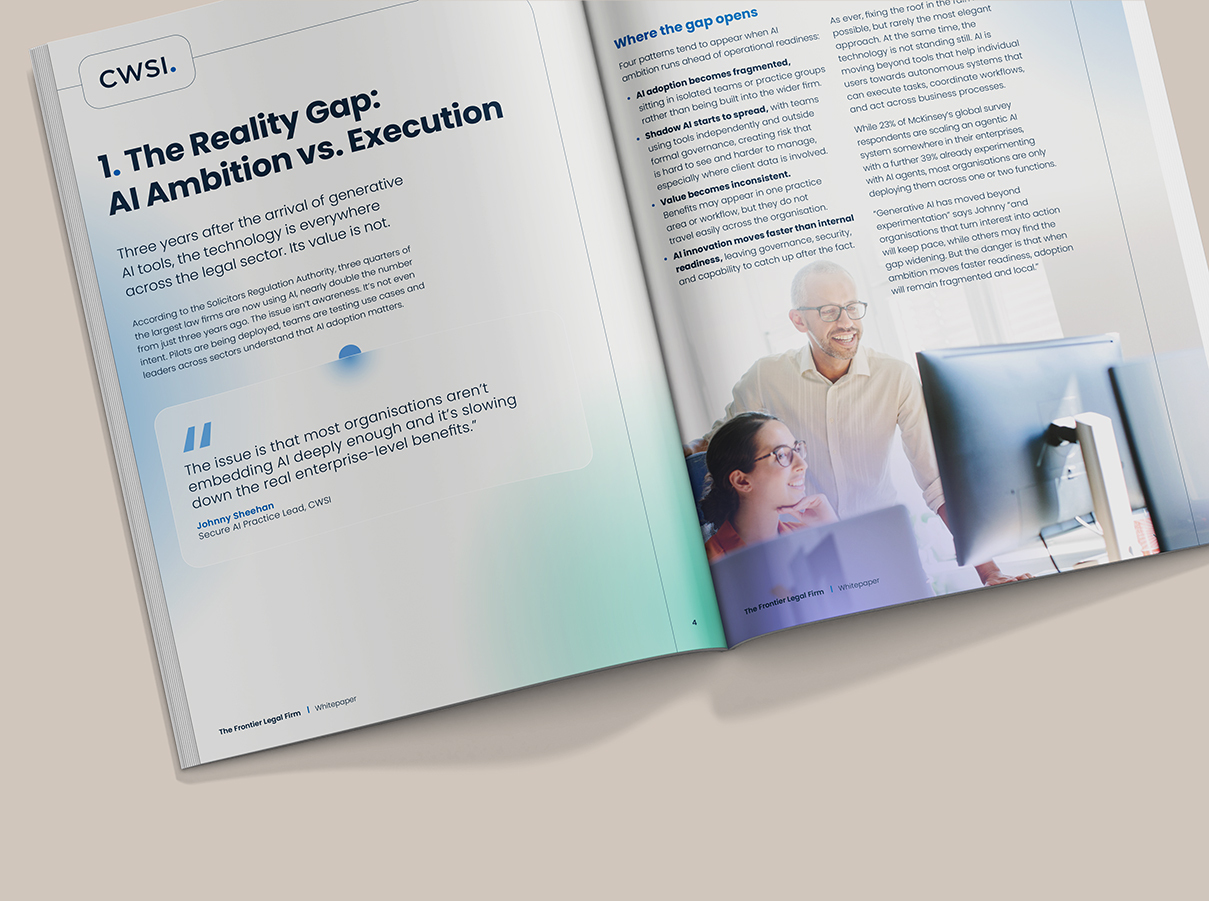

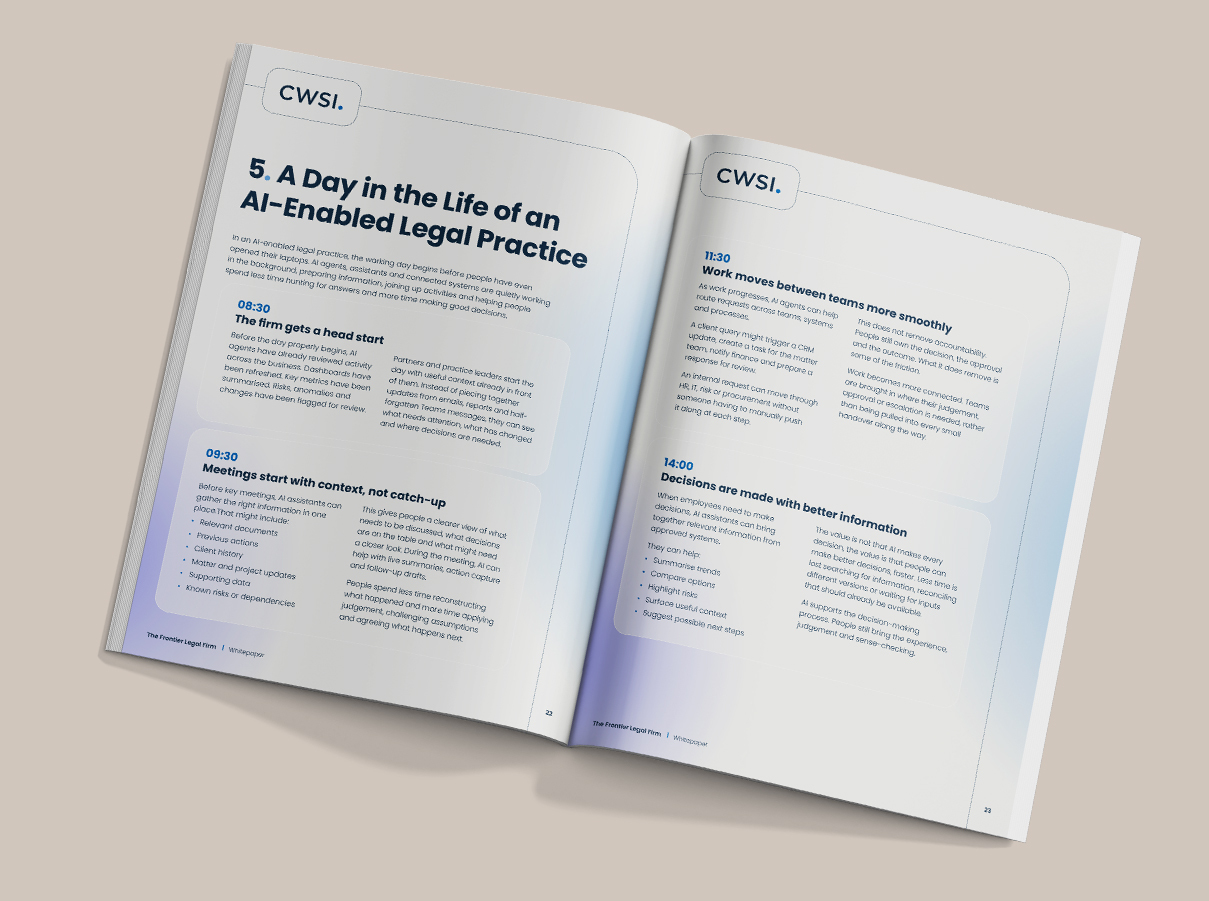
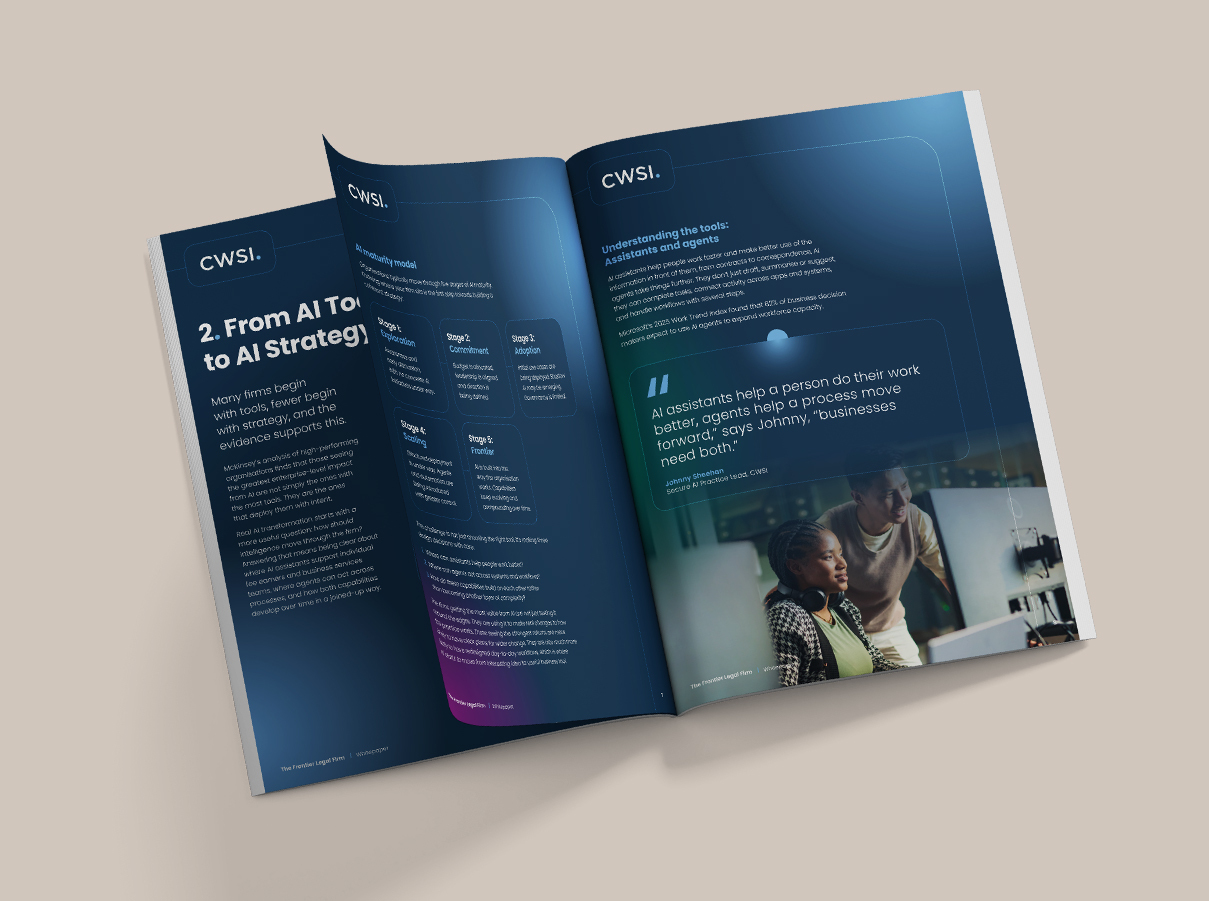
Four challenges legal firms need to address
Shadow AI is already happening
Unapproved tools may already be handling client or matter information, often outside IT’s view.
Client confidentiality is at risk
Poor permissions can expose sensitive information across matters, teams and ethical walls.
Governance needs evidence
Policies are not enough. Firms need clear controls, records and accountability.
Ad-hoc adoption does not scale
Disconnected pilots create uneven controls, duplicated effort and avoidable risk.
Move faster without losing control
AI adoption doesn’t have to mean more risk. With the right foundations in place, legal firms can keep sensitive data under control while protecting client confidentiality.
Our guide sets out the practical steps legal firms should take before scaling Microsoft Copilot and AI agents, helping prepare your firm for AI while maintaining client trust.