More security doesn’t have to mean more tools. Use this guide to get more from the security capabilities you already own.
Security estates rarely become complex overnight. New tools are added to solve new problems, address emerging risks or meet changing requirements. Over time, the result can be greater cost and complexity without a corresponding increase in protection.
Consolidation offers a way forward. But just because two tools appear to do the same thing doesn’t mean one can simply be switched off. The real question is whether existing capabilities can deliver the same level of protection once properly configured, tested and embedded.
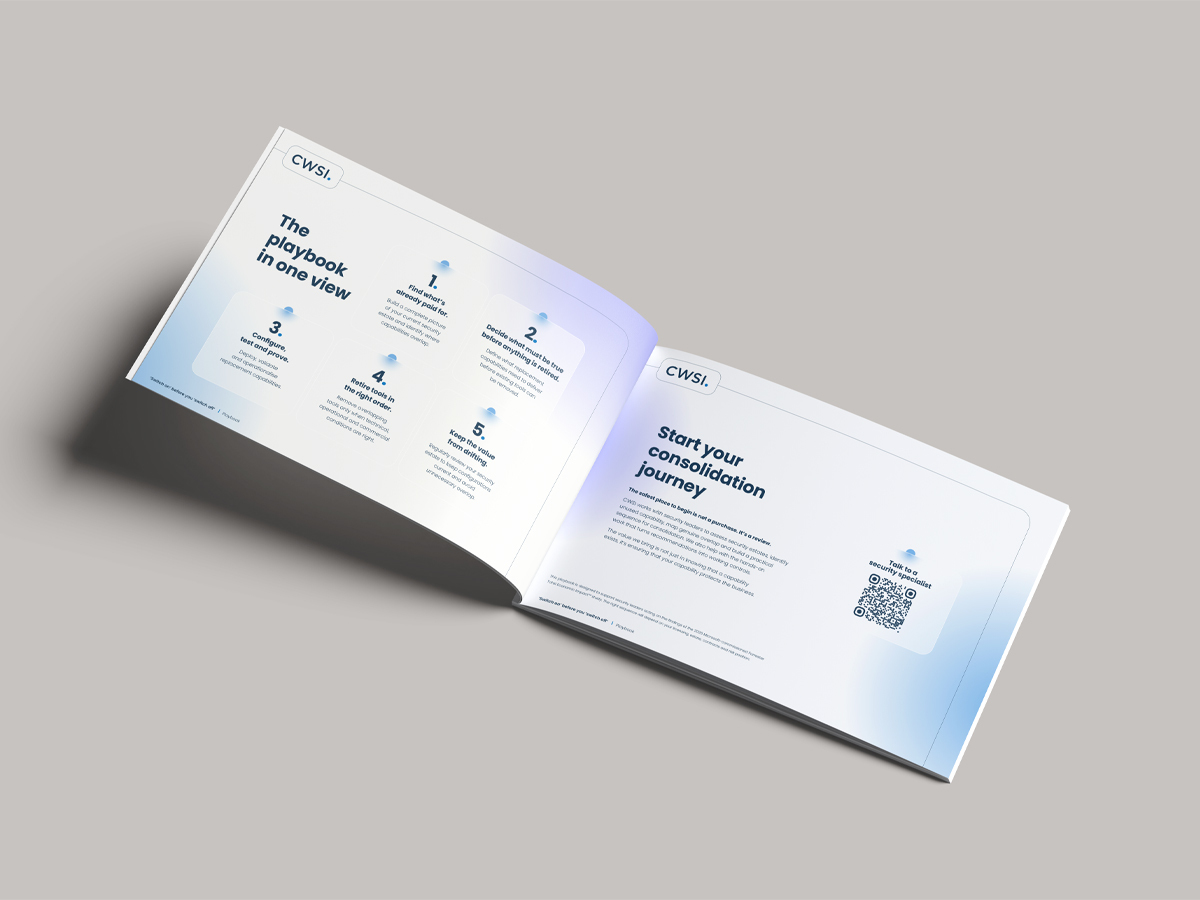
That’s where this playbook comes in. Its practical five-step framework helps you uncover genuine overlap, validate which capabilities can safely take over and ensure the right protections are in place before anything is switched off.
Download your complimentary copy to uncover where you can simplify your security estate, reduce unnecessary spend and unlock more value from the investments you’ve already made.
Inside this playbook you’ll discover how to:
- Map your security estate and identify genuine overlap
- Define what replacements need to deliver before anything is retired
- Configure, test and validate capabilities before they take over
- Retire overlapping tools in the right order without introducing unnecessary risk
- Keep your security estate optimised as requirements and capabilities evolve


The case for security consolidation
A simpler security estate can deliver more than licence savings. Done well, consolidation can reduce operational overhead, free up security teams and lower the overall cost of maintaining protection.
The latest Forrester Total Economic Impact™ study, commissioned by Microsoft, shows what that can look like in practice:
124% ROI
with the investment paying for itself in less than six months after consolidating on Microsoft Security.
€10.04 million
in estimated savings by retiring duplicate licences, reducing consumption charges and lowering professional services costs.
40%
of projected security headcount growth avoided through simpler operations and less manual effort.