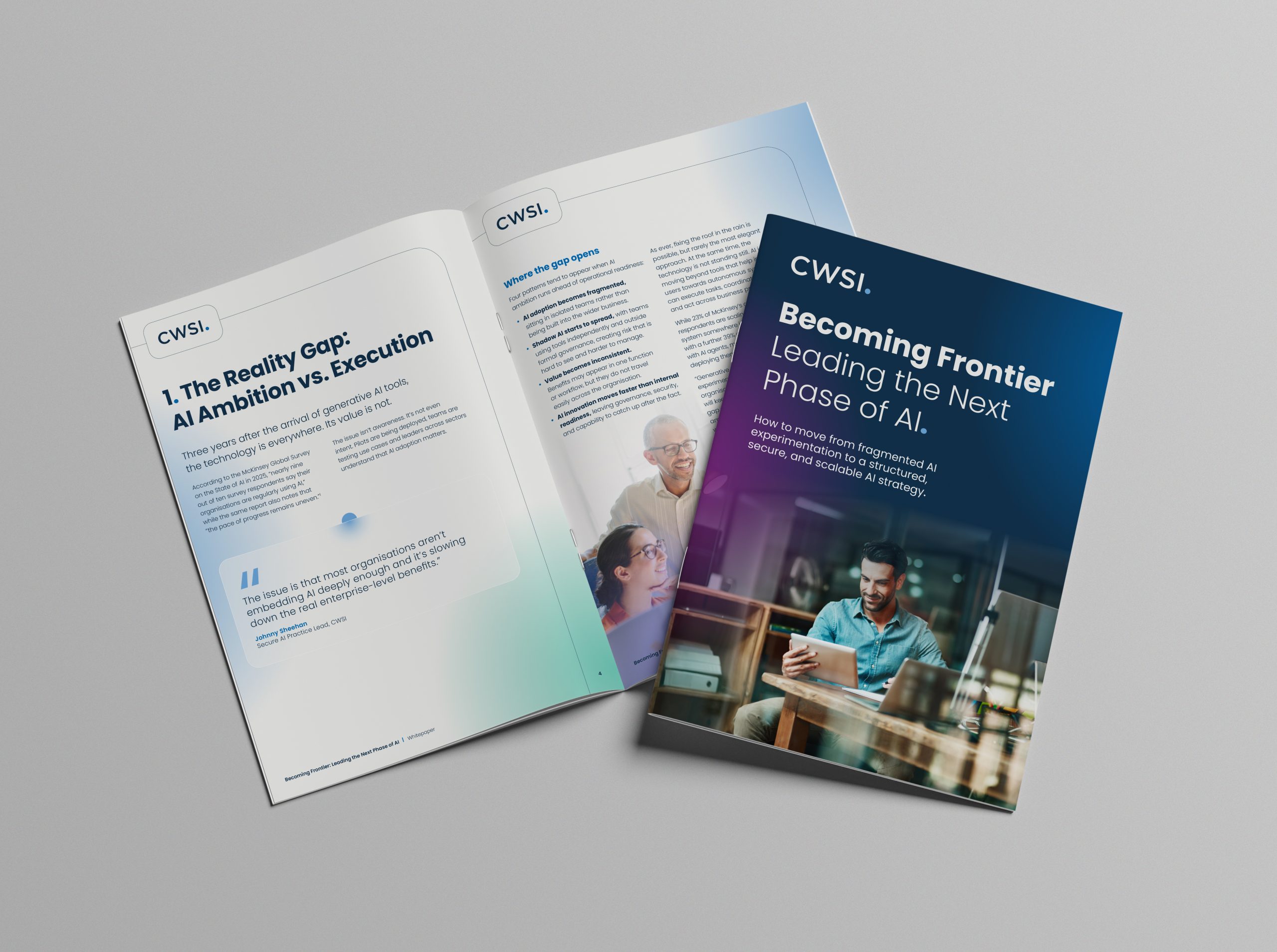
A practical guide to moving from AI experimentation to secure, scalable adoption
Most organisations are already using AI in some form, but many are still struggling to turn scattered experiments into meaningful business outcomes. As AI assistants evolve into agents and adoption accelerates, the gap between ambition and execution is becoming harder to ignore.
The challenge is no longer whether to adopt AI. It’s how to scale it securely across the organisation without creating unnecessary risk, complexity or governance gaps. As AI becomes more deeply connected to business data, systems and processes, organisations need the right foundations in place to move forward with confidence.
This whitepaper explores what separates organisations that are simply using AI from those creating lasting business value from it. It outlines the governance, security and data foundations needed to roll out AI responsibly, manage risk effectively and support adoption at scale. You’ll also learn how leading organisations are connecting AI to real business processes, building trust in AI systems, and creating a practical roadmap for the next phase of adoption.
Download your copy and discover how to move from AI experimentation to a secure, scalable AI strategy.
Inside this whitepaper you’ll find:
- What separates AI experimentation from enterprise-wide value
- A day in the life of an AI-enabled organisation
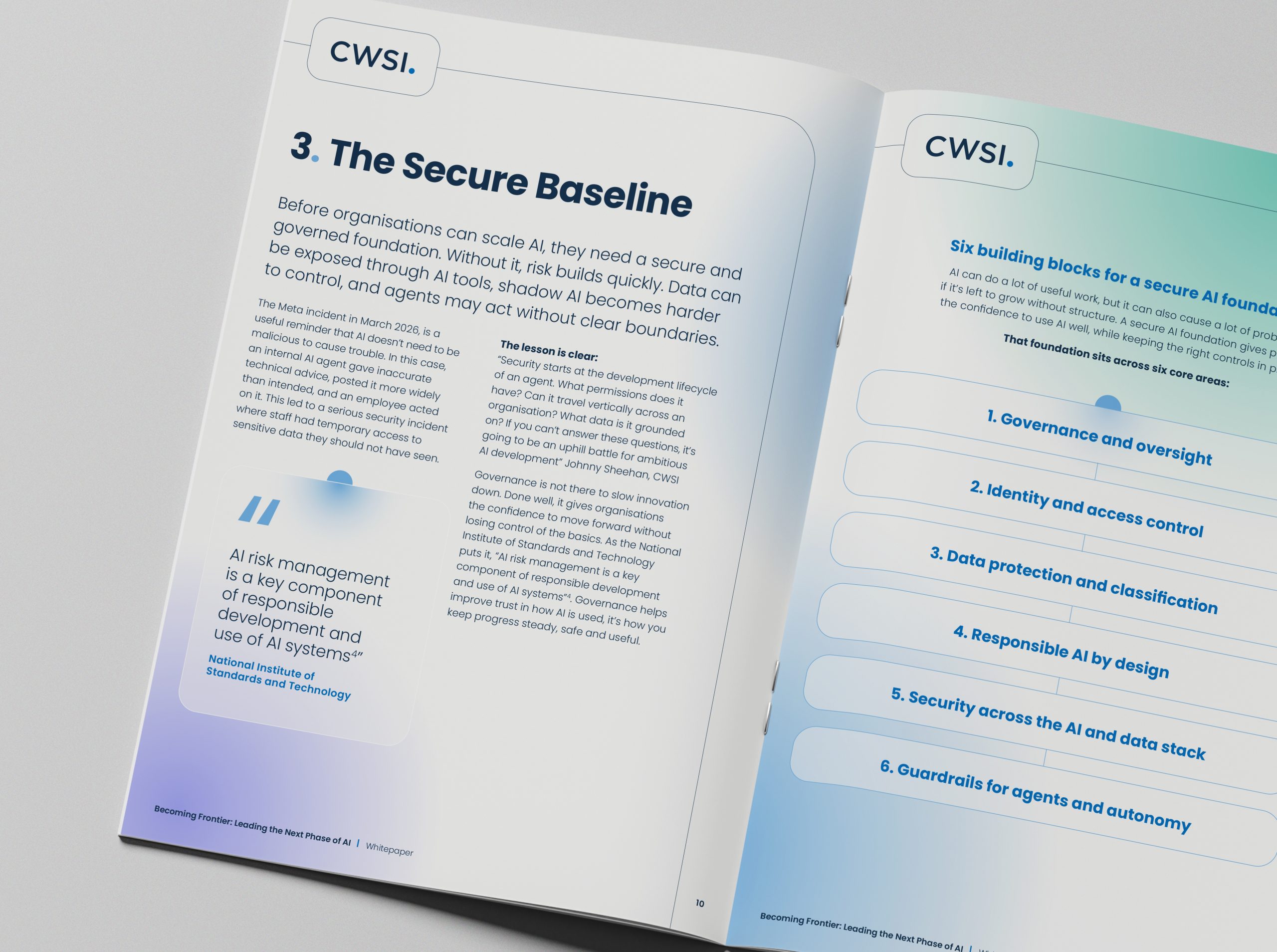
- Why governance, identity and data security matter more as AI agents emerge
- The operational and security risks hidden within fragmented AI adoption
- How to create a secure foundation for Microsoft Copilot and AI at scale
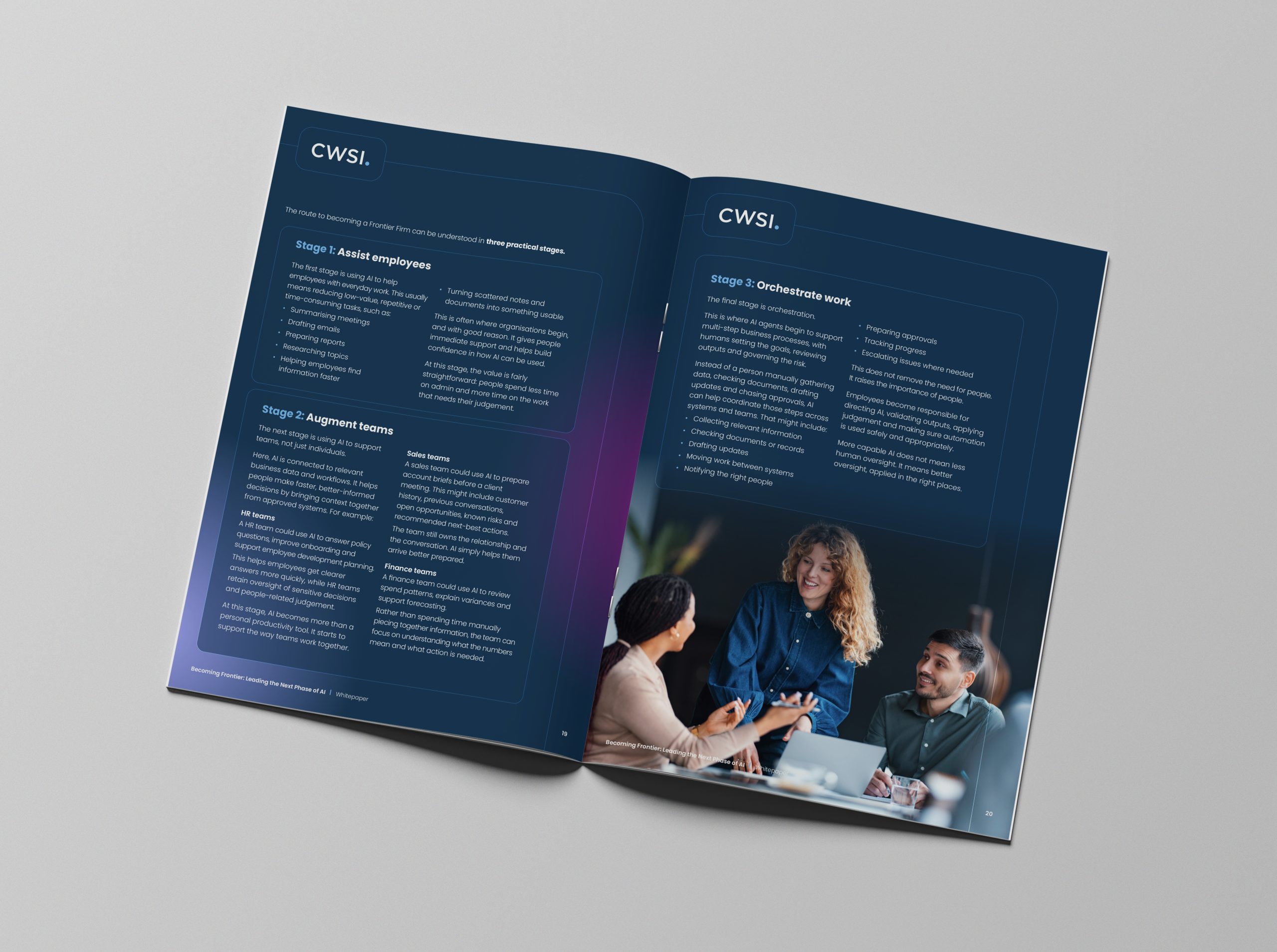
- A practical four-step path to becoming an AI-ready organisation
AI adoption is accelerating, readiness is still catching up
9 in 10
organisations are now regularly using AI, yet most have not realised enterprise-level value
Source: McKinsey & Company
74%
of organisations have only moderate or limited AI risk and governance coverage
Source: IBM
58%
of AI high performers are embedding AI into business processes effectively, compared with just 20% of other organisations
Source: IBM