AI agents are moving quickly. Governance is not always keeping up.
AI agents are quickly becoming part of everyday business. They do more than answer questions. They access systems and data, complete tasks, and increasingly make decisions as part of day-to-day operations. That brings real opportunities, but it also raises some important questions.
What systems and data can your AI agents access? Who gives them permission to act? And who is responsible for the decisions they make? For many organisations, those answers are still taking shape. That’s where identity governance comes in.
In this whitepaper, you’ll discover why AI governance becomes more challenging as AI adoption grows, how identity governance helps you manage access, permissions and accountability, and how a practical four-stage maturity model can help you assess where your organisation stands today and what to focus on next.
Download your complimentary copy to see how a strong identity foundation helps you deploy AI securely, responsibly and at scale.
Inside this whitepaper you’ll find:
- Discover why existing IAM approaches can weaken when agents start acting across systems.
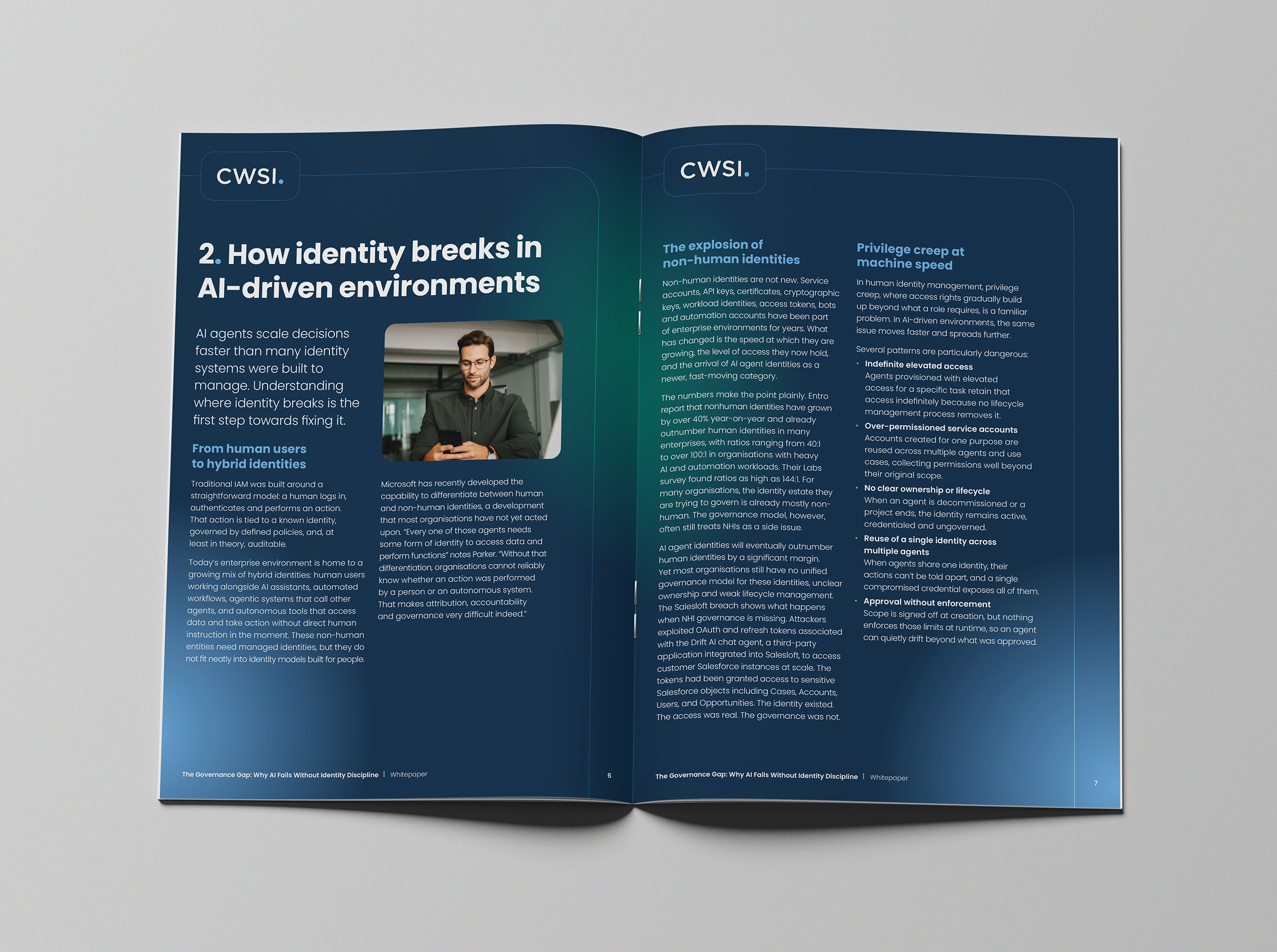
- Understand how identity breaks in AI-driven environments, including non-human identity sprawl and privilege creep.
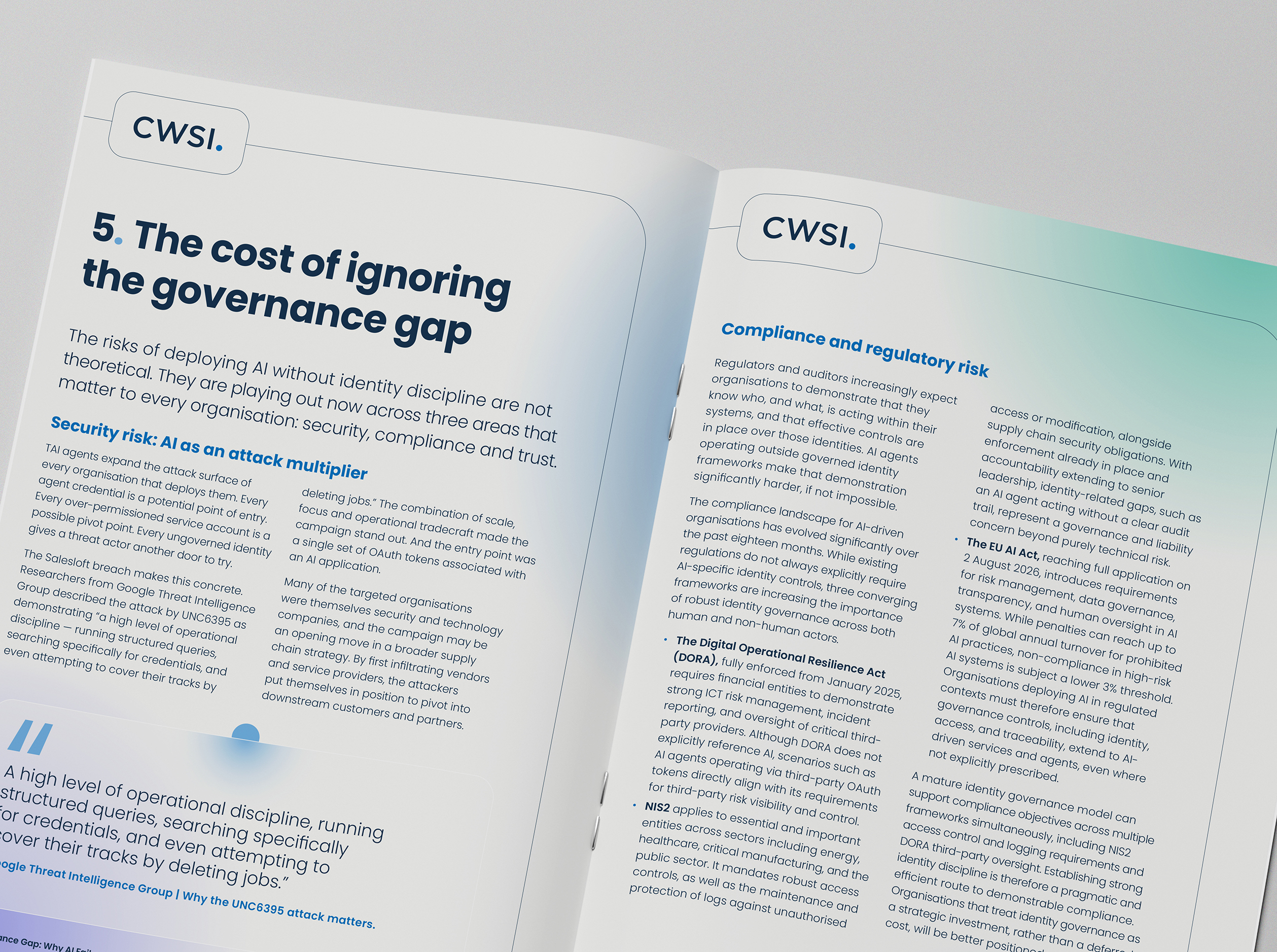
- Identify the three places where control is usually lost: accountability, visibility and policy enforcement.
- Learn what identity discipline looks like in practice, with lessons from governance-first deployments.
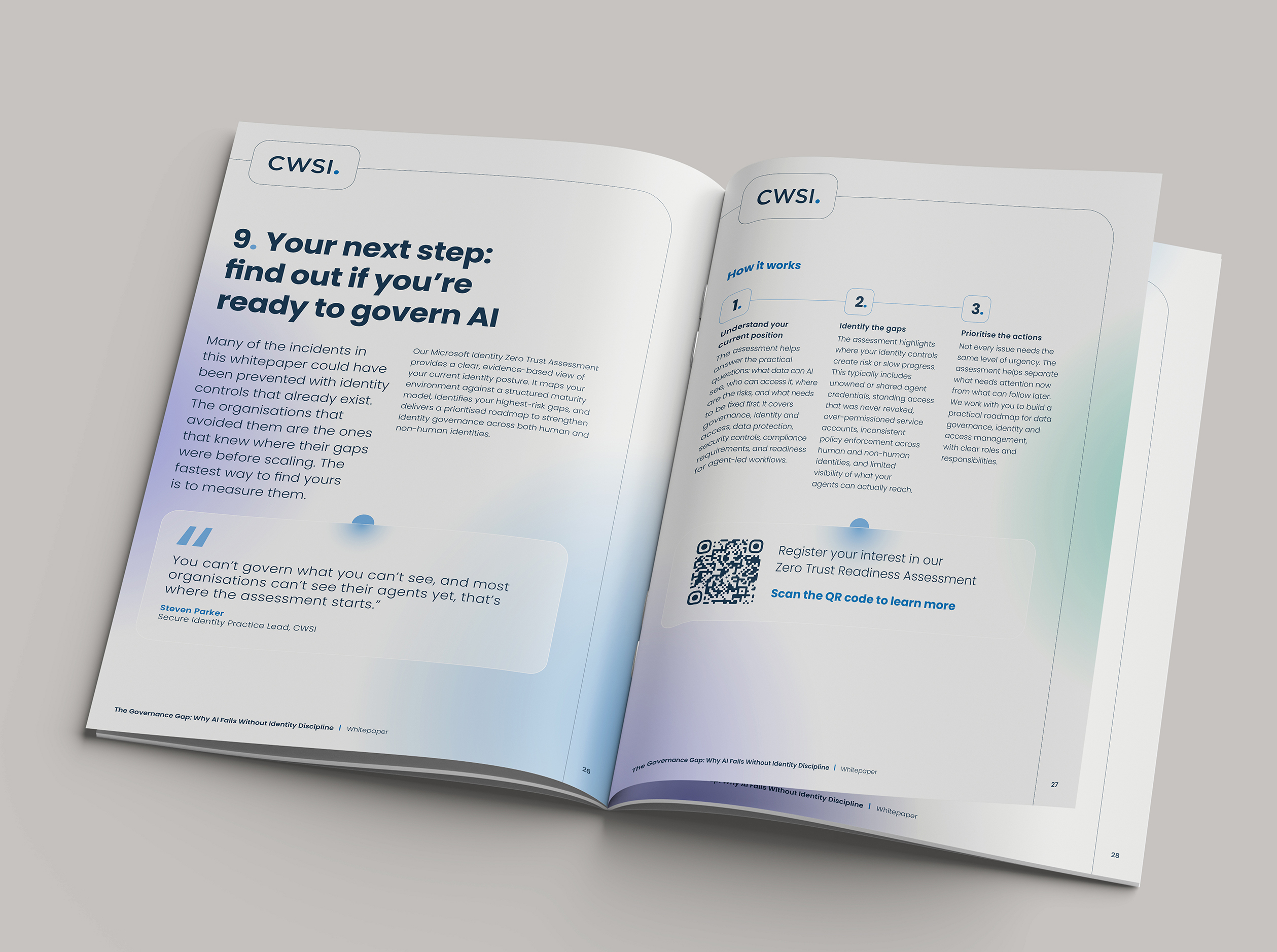
- Use a four-stage maturity model to understand where your organisation stands today and what to do next.
The AI tipping point
1.3 bn
AI agents are expected to be in use by 2028, according to IDC.
82:1
There are 82 machine identities for every human identity in organisations worldwide.
7%
Of total worldwide annual turnover is the maximum EU AI Act fine for prohibited AI practices.